Art Blog #180
- Paul Connor

- 4 hours ago
- 3 min read
My top five artists (not in the gallery) - Impressionist artist and collector Gustave Caillebotte

Artist quick biography
Gustave Caillebotte (born August 19, 1848, Paris, France—died February 21, 1894, Gennevilliers) was a French painter, art collector, and impresario known for blending elements of academic and Impressionist styles into a distinctive fusion.
His early artworks depict the wide new boulevards and modern apartment buildings designed by Baron Haussmann for Paris during the 1850s and ’60s.
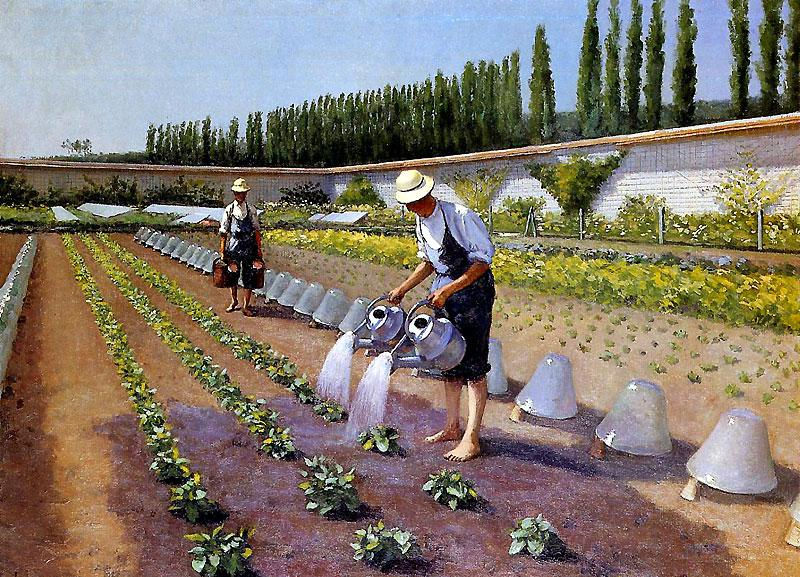
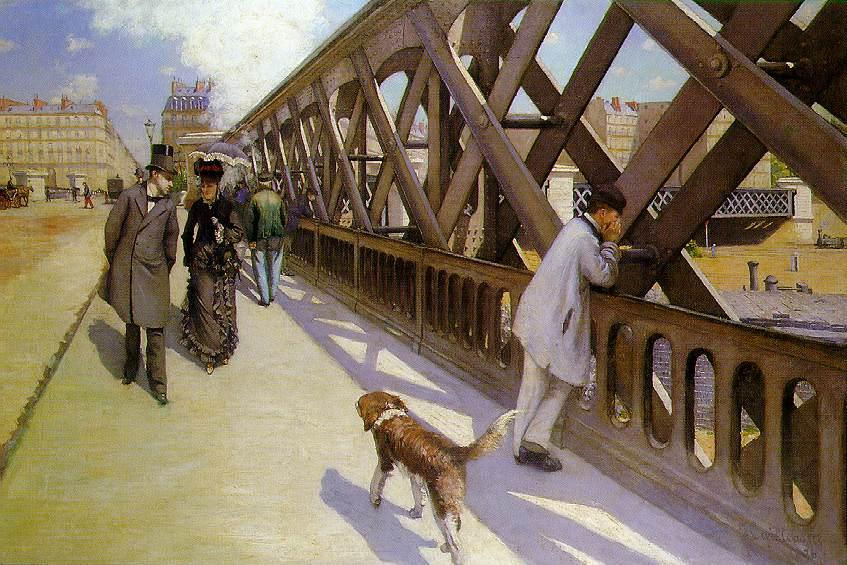
The iron bridge shown in The Pont de l’Europe (1876) exemplifies his fascination with the modern urban environment, while The Floor Scrapers (1875) portrays a realistic scene of city workers diligently engaged in their tasks. Caillebotte’s masterpiece, Paris Street; Rainy Day (1877), employs bold perspective to create a grand depiction of a Paris intersection on a rainy day. Caillebotte also created portraits and figure studies, boating scenes and rural landscapes, and decorative floral studies. In his later works, he often used brighter colors and heavier brushwork.
Caillebotte was a passionate collector of Impressionist art and provided support to emerging and financially struggling artists like Claude Monet
Upon his death, his collection of Impressionist art was donated to the Luxembourg Palace and later to The Louvre
This collection of sixty-eight paintings, included works by Camille Pissarro (nineteen), Claude Monet (fourteen), Pierre-Auguste Renoir (ten), Alfred Sisley (nine), Edgar Degas (seven), Paul Cézanne (five), and Édouard Manet (four).

Other interests:
Caillebotte used his wealth to pursue hobbies he was passionate about, such as stamp collecting, orchid cultivation, yacht construction, and even textile design. The women depicted in his paintings Madame Boissière Knitting (1877) and Portrait of Madame Caillebotte (1877) might be working on patterns he designed. Following his death, he was honoured in the Roll of Distinguished Philatelists, and the collection he built with his brother Martial is now housed in the British Library.

Paul writes:
Gustave Caillebotte was the most intriguing of all the Impressionist painters due to the diversity of his work, which primarily depicted the everyday life of a Parisian flâneur. Clearly independently wealthy, he captured a specific segment of 1850s French society: the affluent.
Nevertheless, his paintings highlight real people and their daily challenges, their work, and their leisure activities, all portrayed with exceptional artistic skill and a compassionate eye for his subjects.
Gustave Caillebotte has been underrated compared to other Impressionist artists and is still not widely known.
* a flâneur is an ambivalent figure of urban affluence and modernity, representing the ability to wander detached from society, for an entertainment from the observation of the urban life. Flânerie is the act of strolling, with all of its accompanying associations)

What I admire about him as a painter is his choice of subjects. He chose to focus on the male body/nude at a time when most other artists concentrated on the female form, which was a bold decision. "The Floor Scrapers" and "Man at His Bath" both portray the male body in a realistic, non-stylized manner and in everyday situations.
His use of color and perspective is both intriguing and modern for 150 years ago.

This was during a period of significant technological transformation in the industrial revolution, and Gustave effectively captures the contrast and transformation from rural to more urban landscapes.
He achieved his artistic pinnacle between 1874 and 1884, and one can only imagine the heights he might have reached had he lived to an old age.
Gustave passed away at the relatively young age of forty-five, yet he led a life rich in curiosity, effort, and selflessness during a pivotal time in Paris, France.
His contributions to impressionism endure, and I ponder how artists like Monet, Renoir, and Pissarro would have fared without his financial and moral backing.


Comments