Art Blog #196

7 minutes ago
2 min read
Recent inventions that changed Western Art - The camera and subsequent photograph (1826)

The first permanent photograph of a camera image was created in 1826 by Nicéphore Niépce using a sliding wooden box camera crafted by Charles and Vincent Chevalier in Paris.
Since 1816, Niépce had been exploring methods to fix images from a camera obscura. The photograph he successfully produced captures the view from his window. It was achieved with an 8-hour exposure on pewter coated with bitumen.
Niépce named his technique "heliography".
He corresponded with the inventor Louis Daguerre, and together they formed a partnership to enhance the heliographic process. Niépce continued experimenting with various chemicals to improve the contrast in his heliographs.
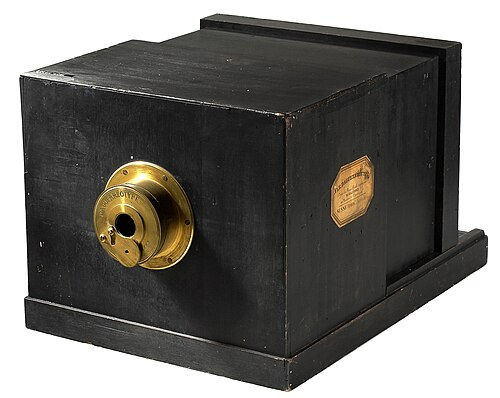
Below are some of the most notable milestones in the evolution of the camera
400 BCE: Mozi, a Chinese philosopher, explains the camera obscura phenomenon, which is a precursor to photography.
1614: Angelo Sala observes the effect of powdered silver nitrate on sunlight, hinting at the potential for photography.
1717: Johann Heinrich Schulze creates temporary sun prints using a mixture of chalk and silver nitrate.
1800: Thomas Wedgwood envisions creating lasting images from camera projections on a surface treated with a light-sensitive chemical.
1826: Niépce captures the first durable, light-resistant camera photograph, requiring an exposure of at least eight hours.
1839: Louis Daguerre unveils the daguerreotype process, creating highly detailed permanent images on silver-plated copper sheets.
1850s: The collodion process merges the high quality of the daguerreotype with the multiple print capabilities of the calotype.
1900: Kodak launches roll film photography, making cameras accessible to the general public.
1980s: Consumer camcorders become widely available, marking a transition from still photography to video.
1990s: The advent of digital cameras and smartphones transforms photography with their portability and convenience.


Comments