


Born April 1988, Shamsia is the first female graffiti artist of Afghanistan. Through her artworks, Shamsia portrays Afghan women in a male dominant society.
Her art gives Afghan women a different face, a face with power, ambitions, and willingness to achieve goals. The woman character used in her artworks portrays a human being who is proud, loud, and can bring positive changes to people’s lives. During the last decade of post-war era in Afghanistan, Shamsia’s works have brought in a huge wave of color and appreciation to all the women in the country.
Her artworks have inspired thousands of women around the world and has given a new hope to female Afghan artists in the country. She has motivated hundreds of Afghans to bring in their creativity through her graffiti festival, art classes, and exhibitions in different countries around the world.
Courtesy of www.shamsiahassani.net


Protest Art
'When you speak out publicly about something - regardless of what form it takes - you’re engaging in your right to freedom of expression. It’s outlined in article 19 of the Universal Declaration of Human Rights.
When you create art and use it to say something poignant about something you care about, or use it to express a stance or a position, you’re not only engaging in the right to freedom of expression, but also whatever rights that your stance or position touches on.'
Amnesty International

Shamsia recently wrote:
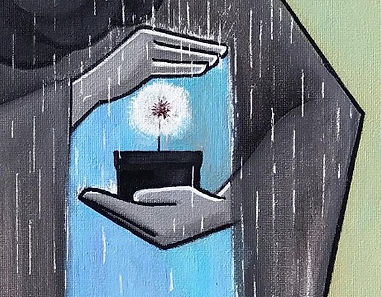
Currently, Afghan women are living in difficult conditions, they are deprived of their basic human rights. Among all the restrictions and problems, the most worrying thing is for the girls of the new generation, the lack of education and freedom has plunged the girls of the new generation into a black hole.
The subject of my paintings is about us and our destiny; about the women and people who live in difficult conditions in Afghanistan, and also about those who unwillingly left their homeland and soul in Afghanistan and migrated, like me!
And I feel people in the world who are in similar situations to us, and I know the words of their hearts.
The unspeakable things that are better expressed with pictures and will definitely be more effective.
زنان افغانستان در شرایط سختی زندگی میکنند، آنها در حسرت داشتن یک زندگی ساده معمولی در عمق سیاهی فرو رفته اند. دختران نسل جدید از ادامه تحصیل محروم شده اند و حتی آزادی های کوچک و معمولی را هم ندارند، این نهایت نا امیدی است و همه میدانیم که با این اوضاع واحوال آینده سیاه تری در پیش روی است.اما چه باید کرد؟
داستان نقاشی های من درباره اتفاق های دنیای امروزی است، درباره من و تو و خیلی هایی که صدای شان شنیده نمیشود. درباره زنان افغان، زنان ایران، مردم مناطق جنگ زده، کودکان بی پناه در دل دنیای بی رحم.
و حتی درباره کسانی که به اجبار مهاجر شدند، غرور خود را زیر پا گذاشتند و آماده هر گونه تحقیر شدن هستند، فقط برای زنده ماندن و گرفتن حق شان از زندگی روحا در عذاب ابدی به سر میبرند.
داستان نقاشی های من سرنوشت انسان امروزی در جایی به نام جهان سوم است …
Courtesy of Instagram
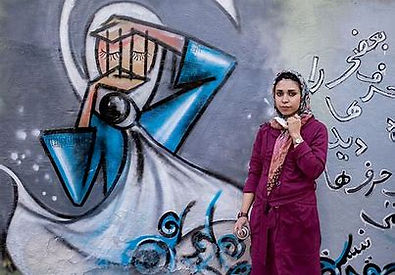
Shamsia’s work is not only strikingly beautiful contemporary art—born on the streets and now powerfully reimagined as protest art—but it’s also a true privilege to showcase her pieces in our gallery. Emerging from a context where simply painting in public was once a radical act, her voice has grown into one of the most distinctive in global contemporary art today.
Every piece she creates feels like a declaration: bold, bright, and unapologetically present. Layers of pattern, colour, and symbolism come together to form images that are instantly recognisable as hers—women in hijabs reimagined as astronauts, warriors, dreamers, and visionaries; cityscapes that blur between reality and possibility; and skies filled with shapes and icons that speak to hope, resistance, and the right to imagine a different future. Her work is bold and unmistakably original, making powerful political, cultural, and social statements that cut across borders and resonate with audiences far beyond her home country.
What makes her art so compelling is the way it balances urgency with beauty. The subjects she tackles—women’s rights, freedom of expression, identity, exile, and the silencing of entire communities—are deeply serious, yet she communicates them through imagery that is luminous, poetic, and accessible. Viewers are first drawn in by the sheer visual impact: the vibrancy of her colours, the elegance of her compositions, the sense of movement that ripples through even her stillest portraits. Then, as they spend more time with the work, they begin to uncover the layers of meaning: references to history and tradition, subtle nods to censorship and erasure, and quiet symbols of defiance that invite reflection and conversation.
For us as a gallery, presenting Shamsia’s work is about more than hanging beautiful pieces on our walls—it is about platforming a voice that matters. Her art gives shape to stories that are too often overlooked and offers a rare, intimate window into the lived experience of women and artists navigating conflict, displacement, and change. Collectors respond not only to the strength of her visual language, but also to the integrity and courage behind it; owning one of her works feels like owning a piece of contemporary history in the making.
Shamsia’s work is not to be missed.

%20g.jpeg)