Art Blog #184
- Paul Connor

- 6 minutes ago
- 4 min read
My top five artists (not in the gallery) - Jacob Van Ruisdael
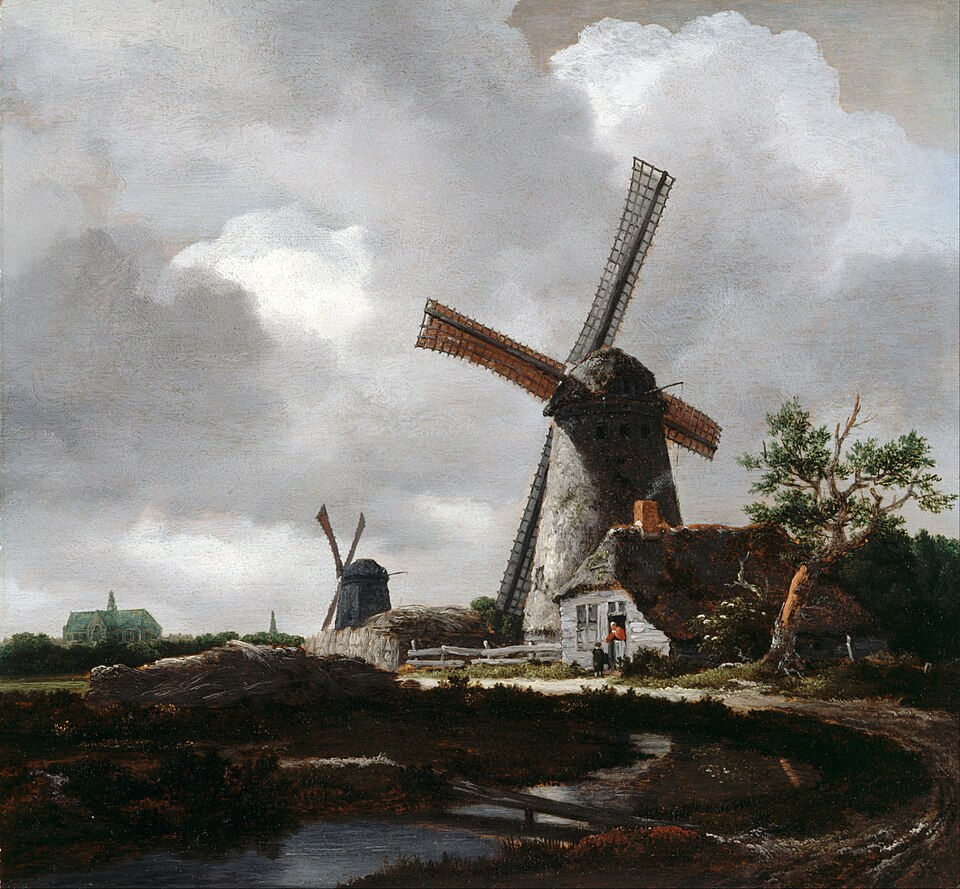
Jacob Isaackszoon van Ruisdael (1629 – 10 March 1682) was a Dutch painter, draughtsman, and etcher.
He is widely regarded as the leading landscape painter of the Dutch Golden Age, a time of significant prosperity and cultural achievement when Dutch painting gained immense popularity.
Ruisdael, known for his prolific and versatile work, portrayed a diverse range of landscape subjects. Starting in 1646, he created Dutch countryside scenes of exceptional quality for someone so young. Following a trip to Germany in 1650, his landscapes adopted a more heroic style. In his later years, while living and working in Amsterdam, he expanded his repertoire to include city panoramas and seascapes.

Jacob Isaackszoon van Ruisdael was born in Haarlem in 1628 or 1629 into a family of painters who specialised in landscapes. The numerous painters in the family and the various spellings of the van Ruisdael name have complicated efforts to document his life and attribute his works.
The earliest date found on a Ruisdael painting and etching is 1646.
By then, landscape paintings were as popular as history paintings in Dutch homes, although at the time of Ruisdael's birth, history paintings were much more common.

Around 1657, Ruisdael moved to Amsterdam, by then a prosperous city which was likely to have offered a bigger market for his work.
Ruisdael lived and worked in Amsterdam for the rest of his life.
It is speculated that Ruisdael might have been a doctor as well. In 1718, his biographer Houbraken mentions that he studied medicine and practiced surgery in Amsterdam.
A prime example of Ruisdael's early work is Dune Landscape, one of his initial pieces, dated 1646.
This painting diverges from the traditional Dutch approach of showcasing expansive dune views with houses and trees accompanied by distant scenes. Instead, Ruisdael prominently features tree-covered dunes, focusing intense light on a sandy path beneath a dramatic cloudscape.
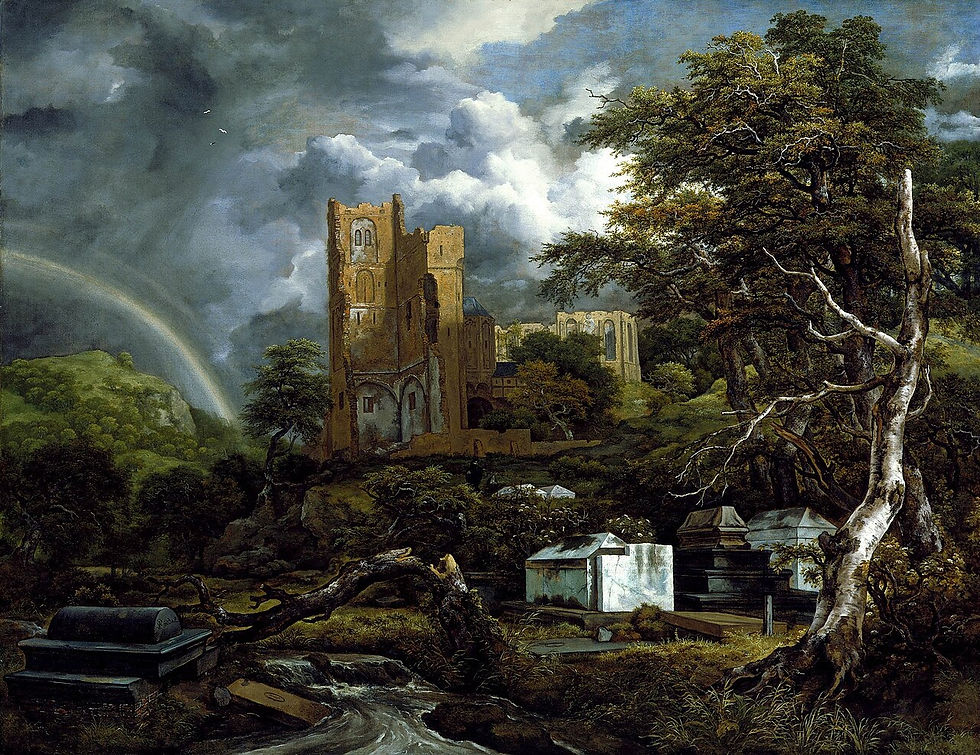
Jacob Van Ruisdael's artistic journey can be divided into three distinct phases:
In his Early Period, he concentrated on straightforward motifs and a meticulous and diligent examination of nature, focusing on dunes, woods, and atmospheric effects.
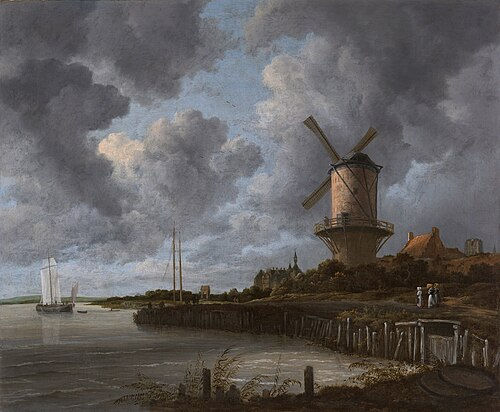
Middle Period - His landscapes evolved to embody a more heroic quality, with larger and more prominent forms, making cemeteries, castles, and water mills his typical subjects.
Later Period - His subjects included rugged ranges, high peaks and mountains.
Legacy
English artists influenced by Ruisdael include Thomas Gainsborough, J. M. W. Turner, and John Constable. In the 1740s, Gainsborough created a black chalk and grey wash copy of a Ruisdael painting—both works are now located in the Louvre in Paris.
Turner produced numerous copies of Ruisdael's work and painted imaginative scenes of a fictional port he named Port Ruysdael.
Constable also replicated various drawings, etchings, and paintings by Ruisdael, and admired him greatly from a young age.

Paul writes:
Growing up in the Northern English town of Bolton during the late 60s and early 70s didn't naturally spark an interest in art, particularly Dutch landscape art.
Yet, I found myself taking the bus to the local library, to borrow books on Dutch art.
I was captivated by the works of renowned artists like Rembrandt and Frans Hals, whose portraits seemed to breathe life into the canvas. However, it was the landscape art that truly resonated with me, and I developed a special appreciation for the breathtaking landscapes crafted by outstanding Dutch artists, with Jacob Van Ruisdael being my clear favorite.
A few years later, while working in London in my early twenties, I often visited The National Gallery, a grand establishment housing an impressive collection of art from various periods and regions. Among its many treasures, the gallery featured numerous large Dutch landscapes that drew me in with their vivid colors and intricate details. However, I was always disappointed that Ruisdael's landscapes were never on display, even though the gallery owned over 20 of them.
In my view, Jacob Van Ruisdael was an extraordinarily talented landscape artist, whose ability to capture the essence of nature was unparalleled. He had a remarkable gift for portraying water, clouds, and trees with stunning precision, easily surpassing artists like Constable, Gainsborough, and other later landscape painters. His landscapes were not merely representations of the physical world; they were emotional experiences that transported viewers to another realm.
Ruisdael's art carries a melancholy and somber tone; winter feels truly cold and dark, evoking a sense of isolation and reflection, while spring suggests hope and renewal, as the earth awakens from its slumber. When he painted waves on a windy day, they looked dangerous and menacing, swirling with energy and life, and you could almost feel the wind rushing through the trees, stirring the leaves and bending the branches.
Most of his work would have been created in his studio, where he relied on his memory of nature's movement, effects, and consequences. This reliance on recollection rather than direct observation speaks volumes about his artistic prowess. His ability to recall and replicate such intricate details is remarkable, showcasing not only his technical skills but also his profound understanding of the natural world.
This was also a time when art supplies, such as paint, oils, and brushes, were not as varied and sophisticated as they are today. The colors were often derived from natural pigments, requiring great skill and knowledge to mix and apply effectively. Yet, I challenge anyone to find landscape art of similar excellence.


Comments