Art Blog #185
- Paul Connor

- 4 hours ago
- 4 min read
My 'top five artists', some comments, exclusions and reflections.

Preamble:
'This wasn't a self-centered endeavour to showcase 'look at all the art I like' by listing my top five artists and discussing them. I genuinely believe that humanity is at a critical juncture, and we are losing our connection with art, artists, and what they symbolize: creativity, imagination, and the spark of the human spirit. I am convinced that art possesses the power, versatility, and beauty to act as a positive force for good and a unifying agent for change.
I adore art, artists and artistic endeavour.
My top five artists were: (In no order)
Hiroshi Sugimoto (Japan)
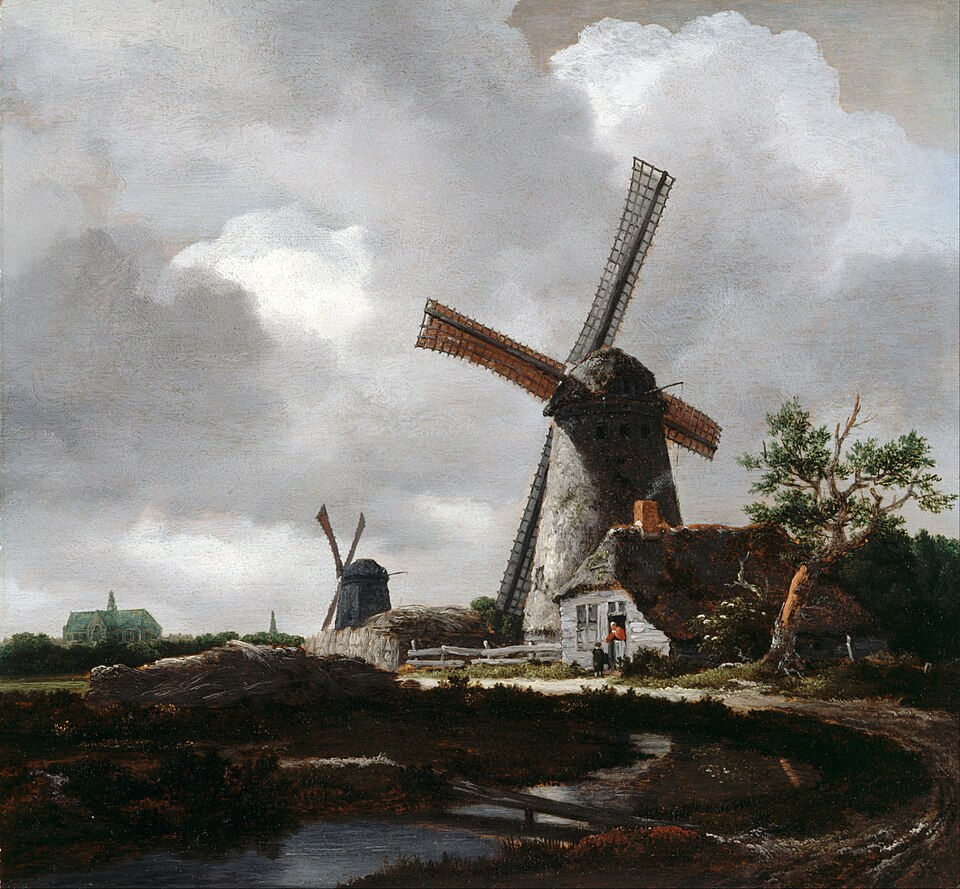
Jacob Van Ruisdael (Netherlands)
Henri De Toulouse Lautrec (France)
Gustave Caillebotte (France)
Rene Magritte (Belgium)
What struck me was that there a five unique styles in different eras and I have to be grateful to be born at at a time when information about art is easily accessible and concise.
There were also various genres, such as photography, landscape, impressionism, and surrealism, demonstrating that art offers nearly limitless styles. The human imagination and the capacity to translate it onto paper are remarkable.
There were a few notable exceptions, such as Vincent Van Gogh, Edgar Degas, and Salvador Dali, and I could just as easily have spoken at length about my admiration for them.
Art is subjective, which is another wonderful aspect. This means that "what one person loves, another may dislike," and the artists on my list might not appear on someone else's list.
Who would be on your list?

No women in your list?
Looking at my top five favourite artists, who are not showcased in the gallery, I immediately noticed a striking absence of women artists among them. This observation compelled me to reflect on the underlying reasons for this lack of representation and to explore the implications of such an absence in the broader context of art history.
Most of the artists included in the gallery are either deceased or were active during the seventeen to nineteen centuries—a period characterized by a myriad of historical and social barriers that significantly hindered the recognition and support of women artists.
Women artists faced immense challenges in gaining access to training, education, and opportunities that were readily available to their male counterparts.
This lack of institutional support meant that their work was less likely to be exhibited in galleries or collected by patrons, further entrenching the cycle of invisibility.
Moreover, the patronage system of the time heavily favored male artists, who were more likely to receive commissions and financial backing from wealthy patrons. This created a significant disparity in the opportunities available to male and female artists.
Reflecting on these dynamics, it becomes clear that the absence of women artists in my top five is a reflection of a deeply ingrained cultural bias that has persisted over centuries.

No Japanese Woodblock Print artists on your list?
I spent a considerable amount of time deeply pondering which Japanese woodblock print artist I would choose to include in my list.
However, after much deliberation, I ultimately decided to omit all individual artists from my consideration. This decision was rooted in my understanding of the intricate woodblock print process, which is far more complex than the solitary efforts of a single artist. It is, in fact, a collaborative endeavor that highlights the importance of teamwork rather than the pursuit of individual recognition.
The process begins with the artist, who draws upon his or her imagination and creative vision to produce the initial design.
Following the artist's creation, skilled carvers step in to translate the drawing into a series of woodblocks. Each color in the final print requires a separate block, meticulously carved to capture the nuances of the original design. This carving process demands not only technical skill but also a deep understanding of how the image will ultimately be printed, which adds layers of complexity to the task.
In addition to the carvers, colorists play a vital role in the woodblock print process. These artisans are responsible for applying the colors to the woodblocks, ensuring that each hue is applied with precision and care.
The publisher not only facilitates the entire process, overseeing the transition from the original artwork to the final printed pieces, but also manages the logistics of distribution, ensuring that these beautiful prints reach homes and collectors around the world.

So how does The Connor Contemporary Art Gallery combat these two reflections?
With regards to showcasing female artists, we at The Connor Contemporary proudly pledge to prioritise the exhibition of predominantly female artists. This commitment stems from our recognition of the vast and diverse pool of exceptionally talented women in the art world. These artists bring their own unique styles and perspectives to their work, often infused with a distinctive feminine sensitivity that resonates deeply with audiences.
There exists a plethora of highly skilled female artists whose contributions to contemporary art are not only significant but also transformative.
Moreover, the dedication exhibited by these female artists is commendable. Many of them are extremely hardworking, investing countless hours into honing their craft and perfecting their techniques.
The pieces produced by these talented women often stand out in the art market for their uniqueness and collectability. They offer collectors a chance to own works that are not only visually striking but also rich in narrative and context.

With regards to the intricate and fascinating process of making woodblock prints, our intention is to break down the various stages and techniques involved in this traditional art form, allowing for a deeper understanding of how art is meticulously produced.
Woodblock printing, a technique that dates back centuries, requires not only artistic vision but also a profound knowledge of craftsmanship and materials. Each step of the process, from the initial design to the final impression, plays a critical role in the creation of a finished piece that can evoke emotion and convey meaning.
This exploration into woodblock printing will hopefully shed light on some of the less well-known giants of the art world—those skilled artisans and printmakers whose dedication and expertise often remain overshadowed by more famous artists.
We will also delve into other less well-known parts of producing art, whether that is printers, framers, etchers, or a variety of other essential contributors who play a significant role in the artistic process.
And continue the discussion!



Comments