Art Blog #165
- Paul Connor

- Jul 19
- 2 min read
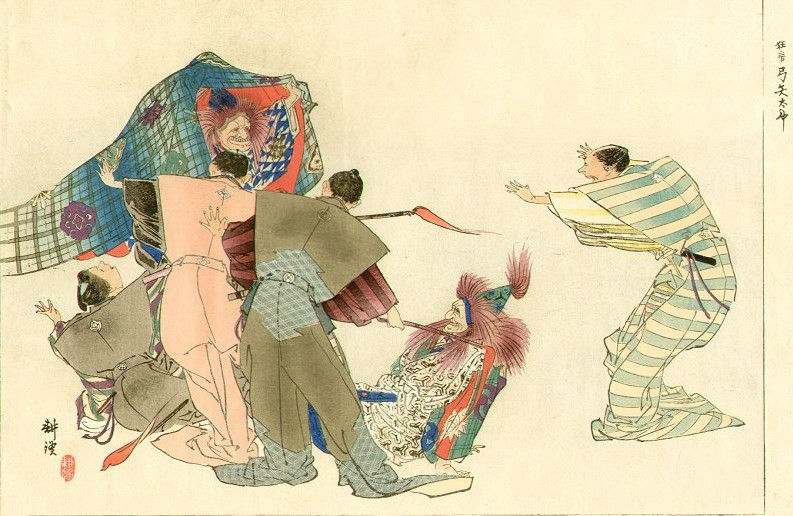
Noh Theatre and Plays interpreted by Kogyo and Gekko

Noh—its name derived from nō, meaning “talent” or “skill”—is unlike Western narrative drama. Rather than being actors or “representers” in the Western sense, Noh performers are simply storytellers who use their visual appearances and their movements to suggest the essence of their tale rather than to enact it. Little “happens” in a Noh drama, and the total effect is less that of a present action than of a simile or metaphor made visual. The educated spectators know the story’s plot very well, so that what they appreciate are the symbols and subtle allusions to Japanese cultural history contained in the words and movements.

Noh developed from ancient forms of dance drama and from various types of festival drama at shrines and temples that had emerged by the 12th or 13th century. Noh became a distinctive form in the 14th century and was continually refined up to the years of the Tokugawa period (1603–1867). It became a ceremonial drama performed on auspicious occasions by professional actors for the warrior class—as, in a sense, a prayer for peace, longevity, and the prosperity of the social elite. Outside the noble houses, however, there were performances that popular audiences could attend. The collapse of the feudal order with the Meiji Restoration (1868) threatened the existence of Noh, though a few notable actors maintained its traditions. After World War II the interest of a larger audience led to a revival of the form.

There are five types of Noh plays. The first type, the kami (“god”) play, involves a sacred story of a Shintō shrine; the second, shura mono (“fighting play”), centres on warriors; the third, katsura mono (“wig play”), has a female protagonist; the fourth type, varied in content, includes the gendai mono (“present-day play”), in which the story is contemporary and “realistic” rather than legendary and supernatural, and the kyōjo mono (“madwoman play”), in which the protagonist becomes insane through the loss of a lover or child; and the fifth type, the kiri or kichiku (“final” or “demon”) play, features devils, strange beasts, and supernatural beings. A typical Noh play is relatively short.
Text Courtesy of www.britannica.com/art/Noh-theatre


Comments